
La Lastra Spring
A historical spring surrounded by mystery and romantic beauty, whose ruins bear witness to the splendor of the mineral-medicinal waters officially recognized in the early 20th century.
Location and Magic of the Surroundings
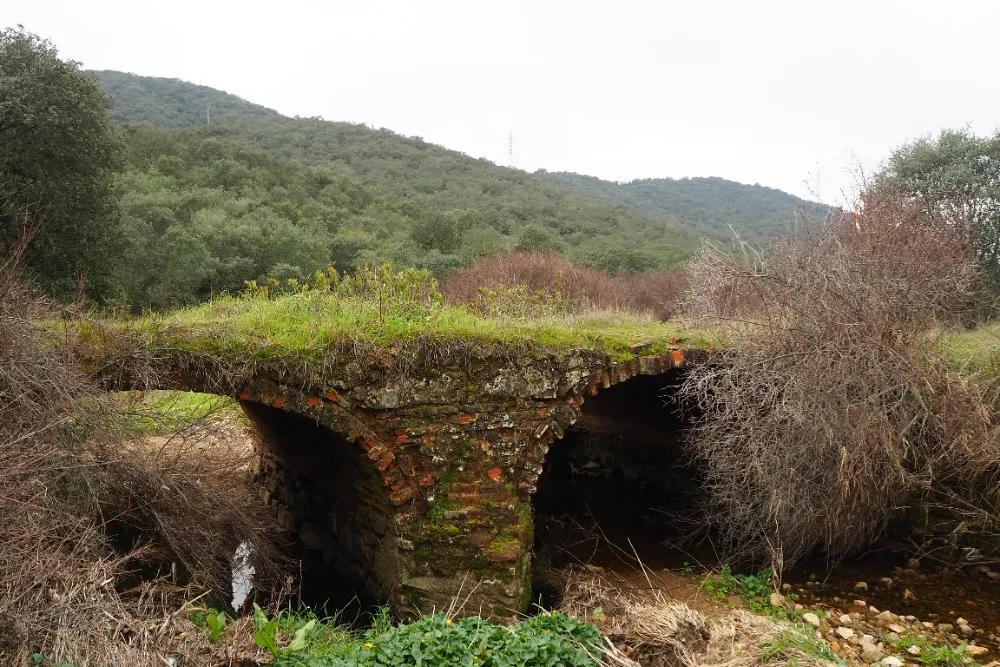
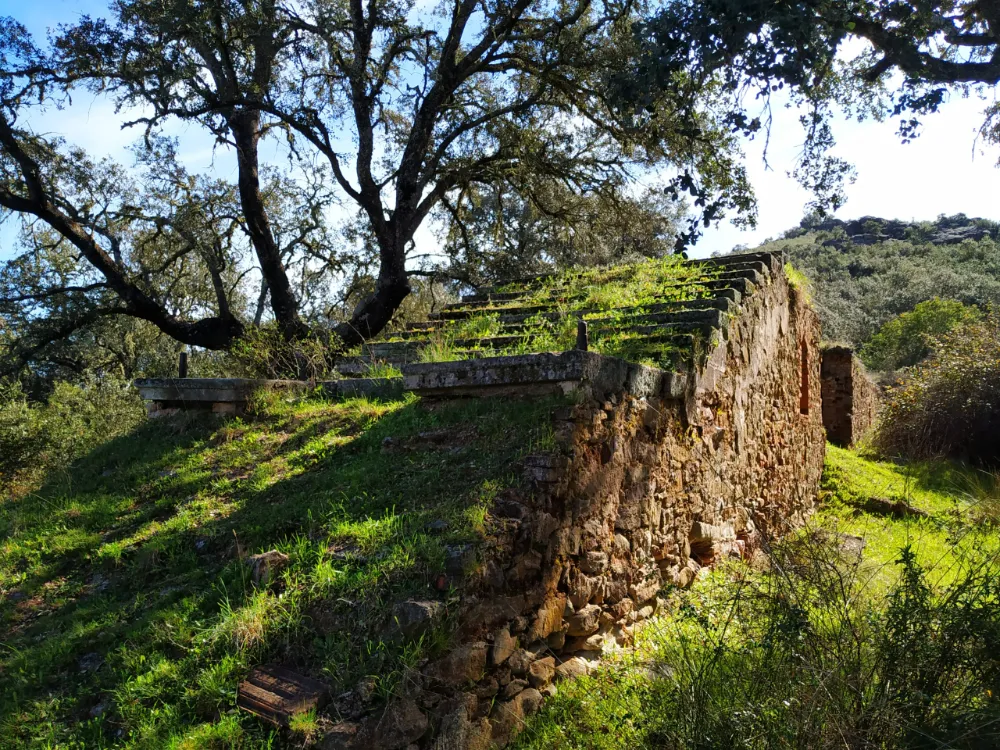
To discover La Lastra, the visitor must follow the course of the Las Navas del Molero stream from the Fuente de San Rafael. About 200 or 300 meters away, an old bridge marks the beginning of a path that goes into the mountain. After walking about 100 meters in a straight line, the captivating ruins of the old kiosk are revealed, which still retain an undeniable romantic beauty.
The spring itself is located slightly to the south, about 10 or 20 meters from the ruins, nowadays half-covered by brambles and land clearings, bearing witness to the relentless passage of time over what was once a highly relevant thermal complex.
History and Official Recognition
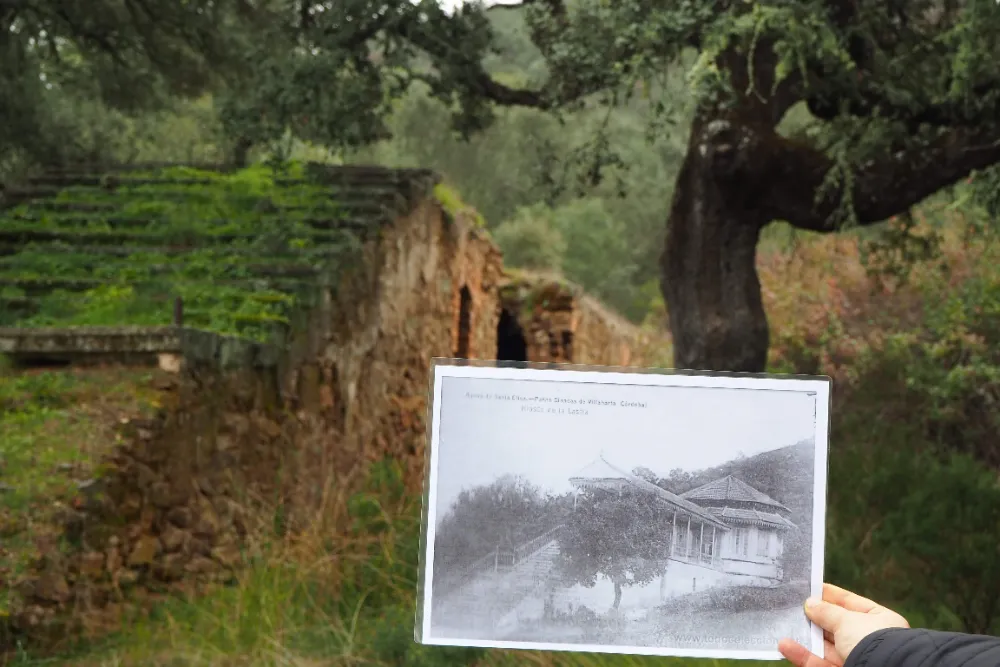
Historically, the identity of La Lastra has been shrouded in confusion. In the IGME reports from the early 20th century, the springs in this area were often mixed and mistakenly grouped under the general name of “Fuente Agria” or associated with neighboring towns. However, rigorous studies confirm that La Lastra was one of the main springs of the Peñas Blancas (Santa Elisa) Spa, located in the municipality of Espiel.
The importance of this system was such that, in 1928, the Peñas Blancas Spa was officially declared of public utility due to the mineral-medicinal quality of its waters, a splendor that remained active until the site was abandoned and fell into ruins after 1936.
A Complex Geological System
The existence of La Lastra is not the result of a simple superficial filtration. The water flows because it ascends through deep fractures in the Carboniferous materials (sandstones and shales) of the Guadiato Basin.
Like the rest of the great springs in the surroundings, La Lastra is not an isolated emergence, but the expression of a complex underground aquifer where waters mix. Therefore, it shares the same chemical profile that made the area famous: it is a bicarbonate, ferruginous (iron-rich), acidic, cold, and carbonic water, with that unmistakable effervescent touch given by the natural CO₂ gas from the depths of the earth.
Follow the water route
The springs of Villaharta hold centuries of history, legends, and unique properties that the Cordoba land has gifted to travelers and locals. Come discover and taste them!
VIEW ALL SPRINGS